
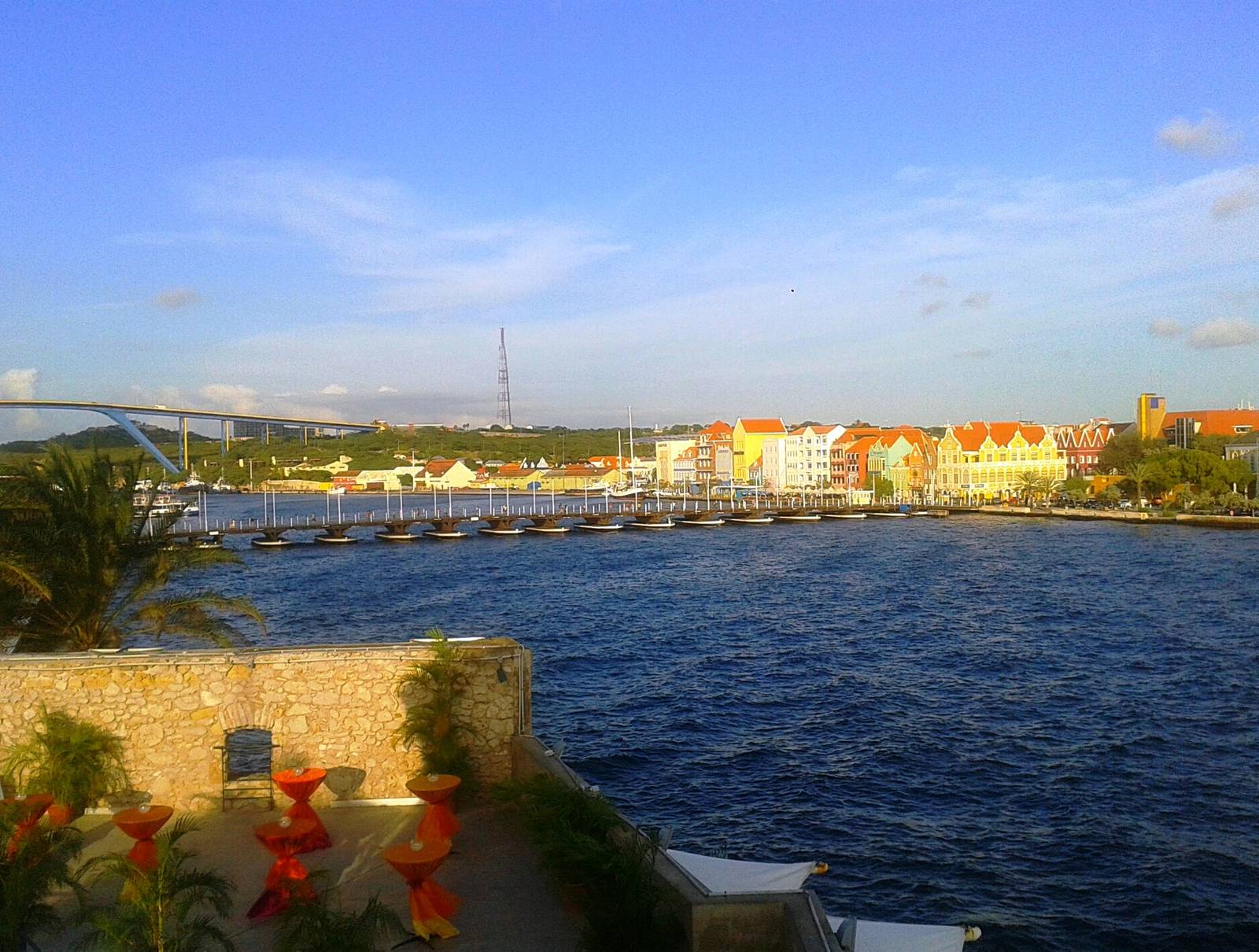
Otrobanda simply means the other side in Papiamentu, which tells you everything about how Punda's merchants once saw it. The west bank grew up a few decades after its older sibling, built by sailors, craftsmen, freed people and traders who could not afford the showcase quarter across the water, and it has never stopped being the side where Willemstad actually lives. Punda performs. Otrobanda is home.
We are neighbors rather than residents. Our hotel has stood on Breedestraat in Punda, two minutes from this bridge, since 1892, and we have watched travelers cross it for an hour and come back for a day. Here is what that day holds.
Punda dressed up to be seen from arriving ships. Otrobanda just got on with living, and that is still exactly what it does best.
I.Climb the ramparts of Rif Fort
Start at the harbor mouth, where a squat stone fort has watched ships thread the channel for the better part of two centuries. Rif Fort's courtyards hold cafes and shops these days, but the reason to come is up the stairs: the ramparts give you the open sea on one side, the channel below, and the Queen Emma Bridge swinging in the middle distance like a slow metronome. Built to guard the harbor entrance alongside the Waterfort on the opposite bank, it has traded cannon for coffee without losing its posture.
Time it for late afternoon if you can. The light comes in low across the water, the cruise ships pull out one by one, and the old walls hold the day's warmth long after the breeze turns cool. Something cold in hand up there is one of Willemstad's simplest pleasures.
II.Get lost in the alleys and werfs
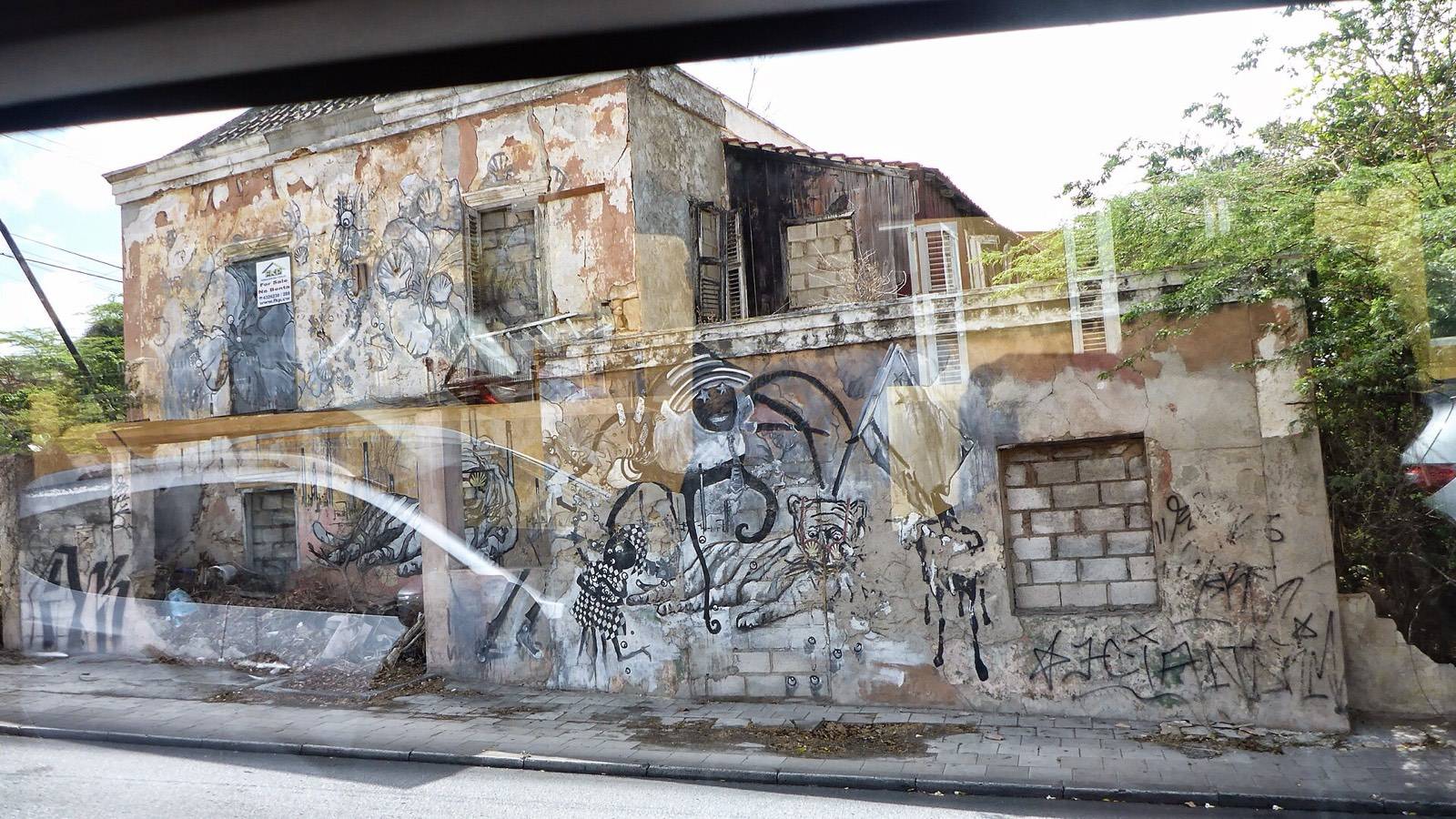
Otrobanda was never planned the way Punda's grid was planned. It accreted, alley by alley, around inner courtyards called werfs, and the result is a quarter you navigate by curiosity rather than by map. Doorways open onto sudden gardens. Laundry lines cross between gables that would anchor a museum district anywhere else. Some blocks are lovingly restored, some are still waiting their turn, and the mixture is the point: this is a living monument, not a finished one.
Wander in daylight, greet the people whose street it is, and accept that you will probably never find the same alley twice. That is not a navigation failure. That is Otrobanda working as designed.
III.Hunt the murals
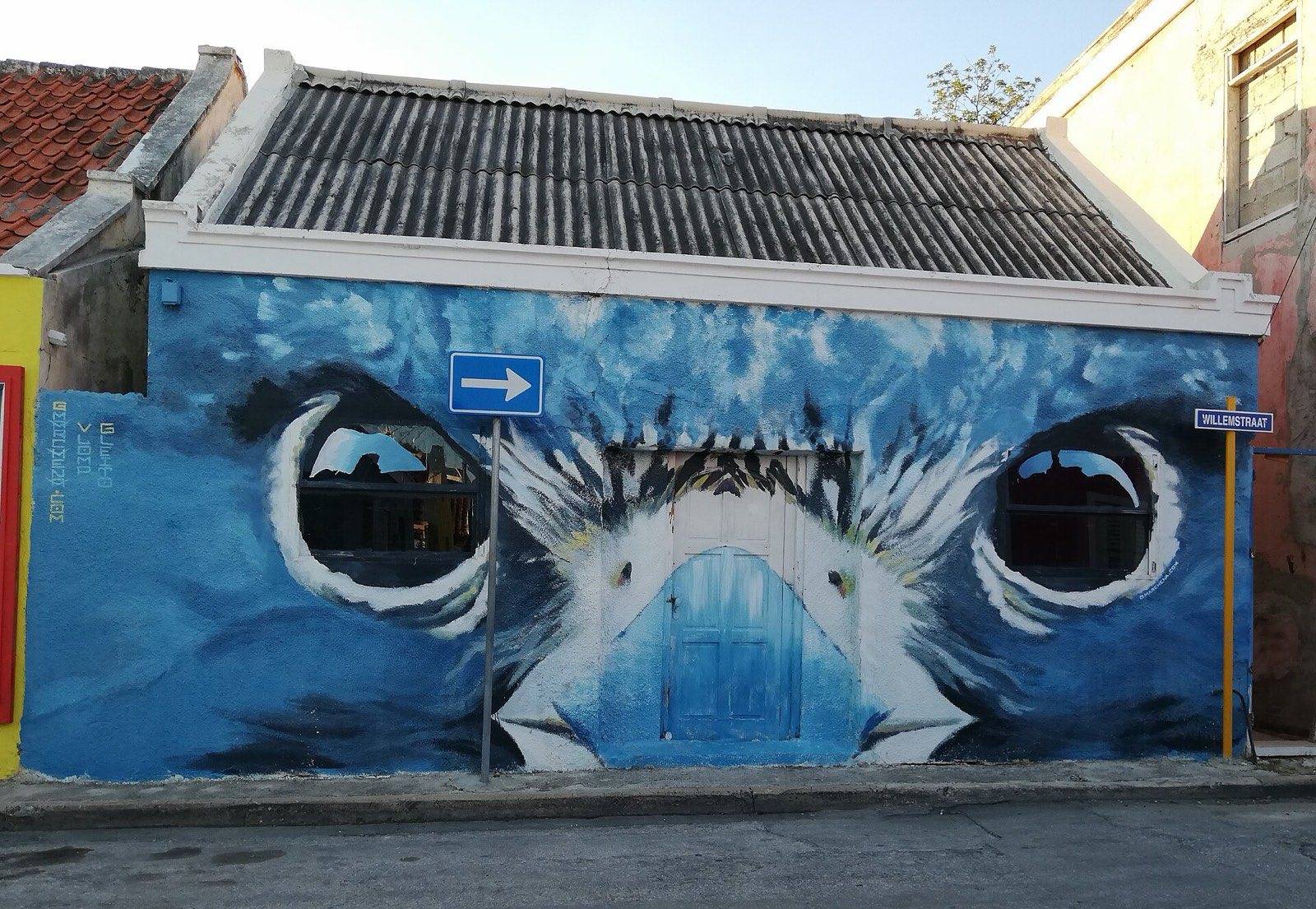
The other thing waiting in those alleys is paint. Over years of community mural festivals, Otrobanda's walls have grown into one of the Caribbean's great open-air galleries, with works by island artists like Garick Marchena alongside visiting painters from everywhere. Some murals claim entire gable ends and stop you mid-stride; others hide behind parked cars and reward the slow walker who looks twice.
You can start collecting walls within five minutes of the bridge. Go in the morning if photographs matter: the light is soft, the lanes are cool, and the walls have not yet disappeared behind the day's parked cars. The full route, including the Scharloo district across the water, is mapped in our guide to Willemstad street art.
IV.Sit with the heavier history
Otrobanda also keeps the island's most serious rooms. The Kura Hulanda museum quarter, set inside a restored complex of townhouses and courtyards, documents the transatlantic slave trade and the African heritage that shapes Curaçao to this day. The island's enslaved rose in 1795 under Tula, and his memory is part of the national story every visitor should carry home. It is not an easy hour, and it is an essential one. Confirm opening details locally, or ask our concierge.
The lanes around the museum continue the lesson quietly. This is the bank where the island's working culture took shape, where Papiamentu filled the courtyards and music spilled from the porches, and you can still feel that inheritance in the rhythm of an ordinary afternoon.
V.Eat and drink at local rhythm
Otrobanda's cafes serve their neighborhoods first and visitors second, which is precisely why they are worth your time. Mornings mean strong coffee and a warm pastechi eaten standing. Afternoons slow to porch pace. Evenings gather around whichever corner has music, and the welcome gets warmer the further you drift from the cruise terminal.
Our own ground floor joins in: Van Gogh Café pours coffee under the arches of the 1892 building while the street runs its slow theater outside. Wherever you settle, order whatever the regulars are having. It is the most reliable menu advice on the island. On the hottest afternoons, a cold fresh-fruit batido from a corner stand does more for morale than any air conditioning.
VI.Cross at dusk, come home at night
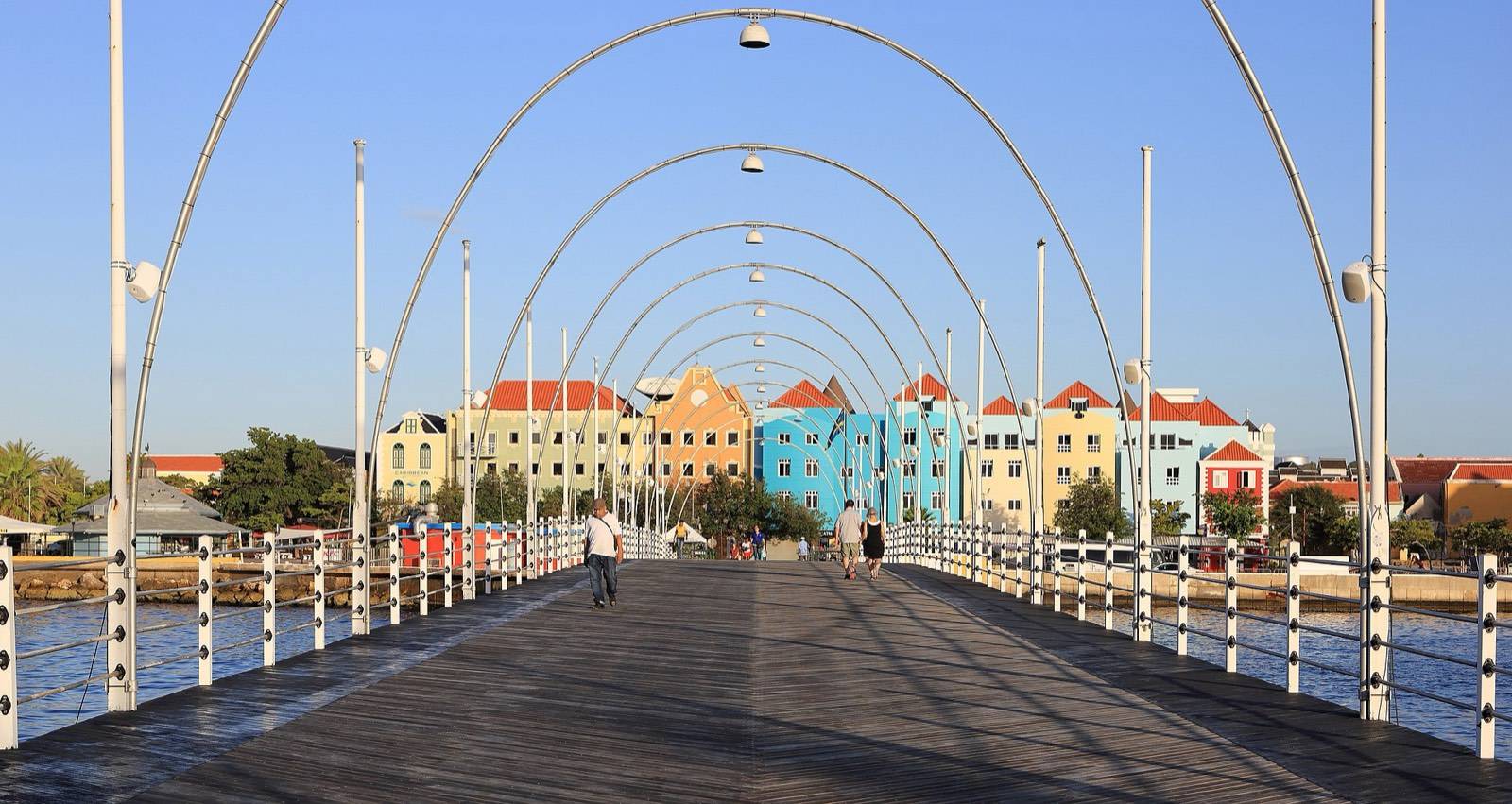
End the day on the water. The Queen Emma Bridge is at its best from this side at dusk, when the lamps come on along the Punda facades and the bridge's arcs light up over the bay. Brionplein, the open square at the bridge foot, fills with evening strollers and the day visitors are gone.
Cross for dinner in Punda or Pietermaai, then come back to the quieter bank. That recrossing, with the lit city behind you and the trade wind at your face, is one of the best free things Willemstad offers. Time the walk so you hit mid-span just after the lamps come on; the ten minutes either side of that moment are the most photogenic of the whole day.
VII.Why stay on this side
Otrobanda makes a quietly superior base. Sunrise lands on Punda's painted waterfront, not in your eyes. Nights run softer, mornings begin with church bells rather than traffic, and the first coffee of the day comes with the whole painted city as a backdrop. The cruise terminal empties away from your street rather than through it, and the whole UNESCO city begins thirty steps from your door. The honest trade-offs, including which streets to favor after dark, are weighed in where to stay in Otrobanda, and the city loop in our Willemstad walking tour starts and ends on this bank.
Questions travelers ask
Straight answers from the front desk.
Is Otrobanda worth visiting?
What does Otrobanda mean?
Is Otrobanda safe at night?
Where do cruise ships dock in Willemstad?
Should I stay in Otrobanda or Punda?
Keep exploring
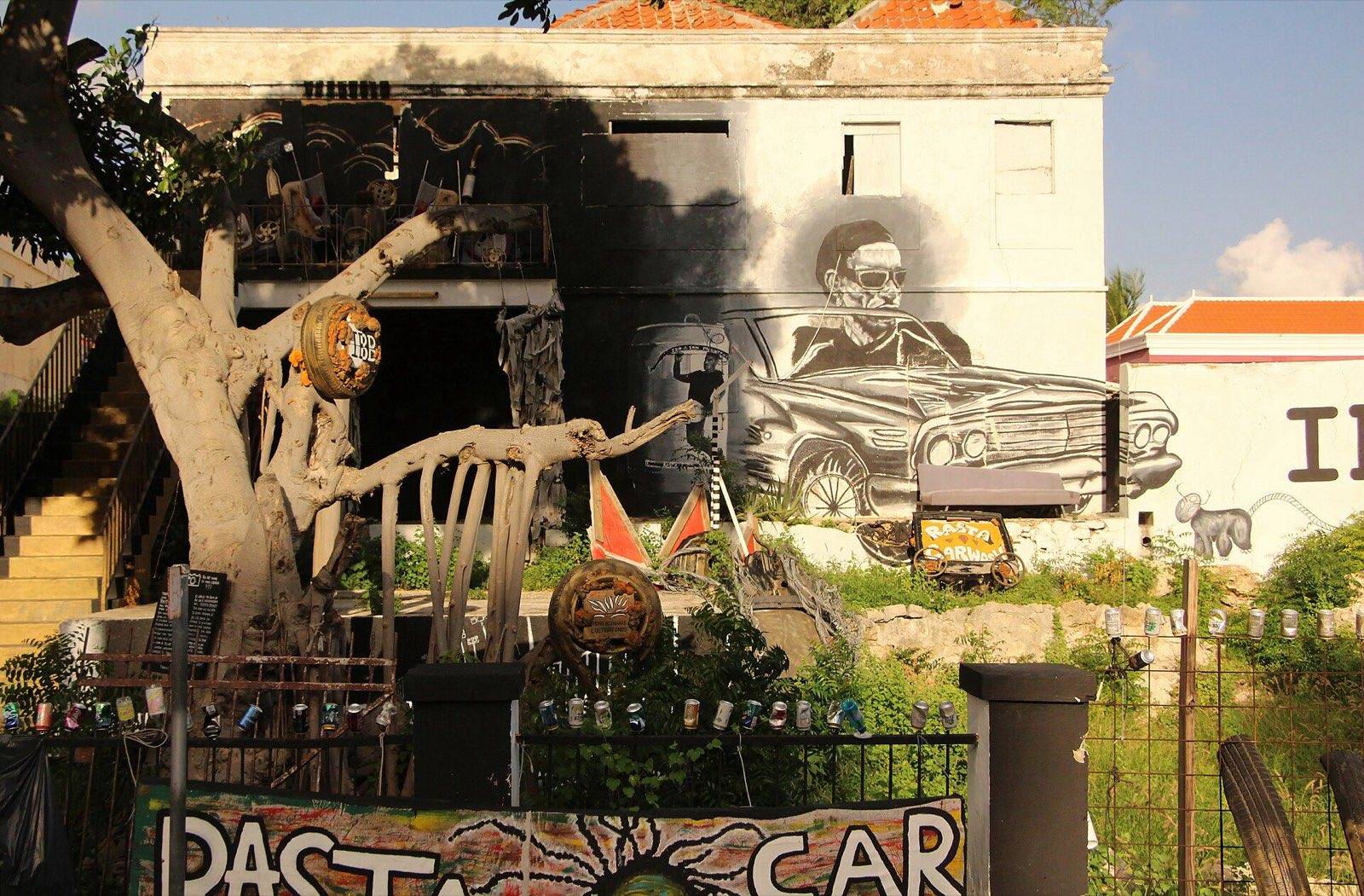
Street art in Willemstad: the murals of Otrobanda and Scharloo
Where to find Willemstad street art: the alleys of Otrobanda and the mural blocks of Scharloo Abou, the…
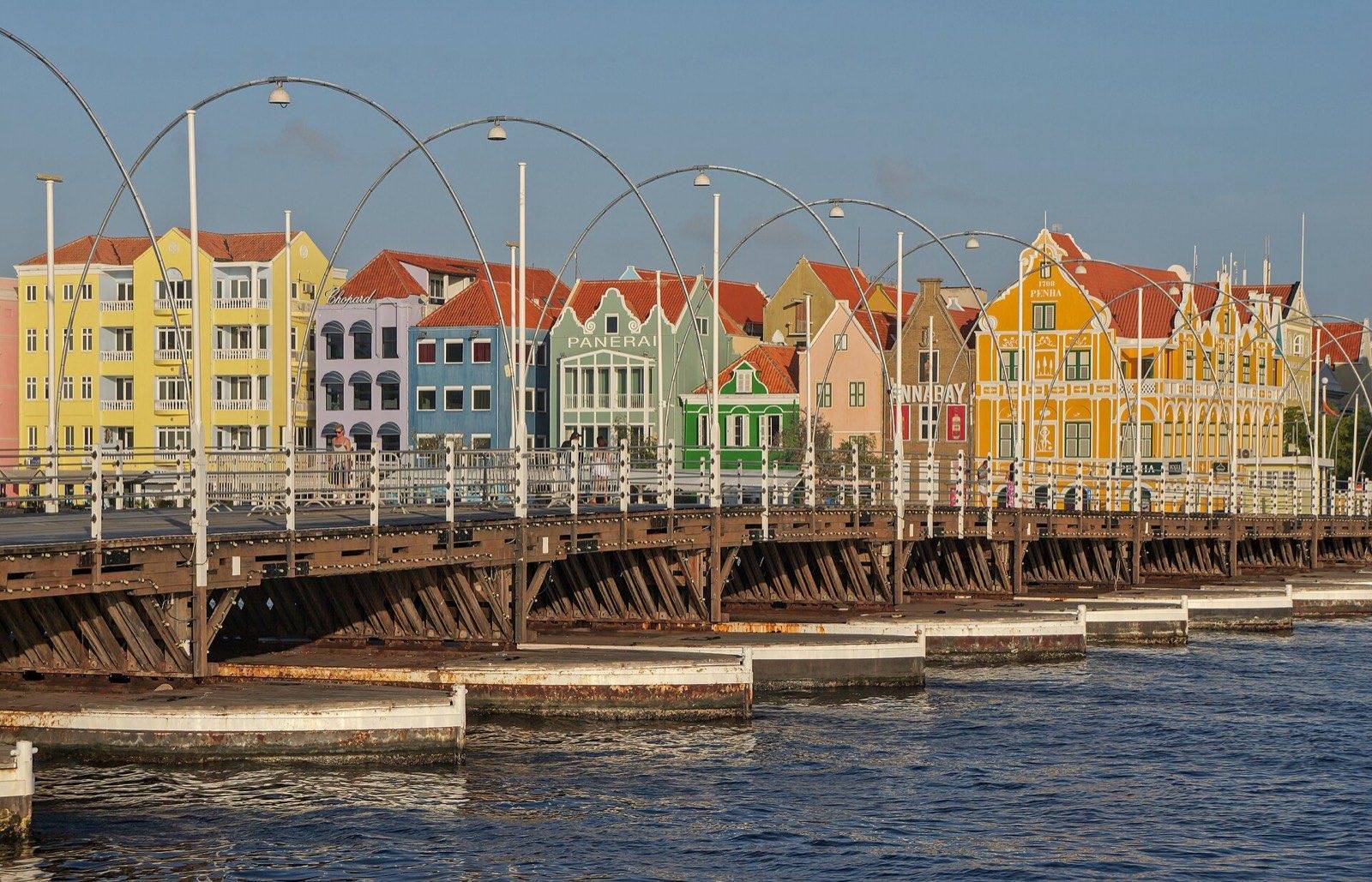
Willemstad walking tour: a self-guided loop of both banks
A self-guided Willemstad walking tour: 2.5 hours, 11 numbered stops across Otrobanda and Punda, from Rif Fort…
Staying in Otrobanda: the case for the other side of the bridge
Where to stay in Otrobanda, Willemstad: quieter evenings, sunrise over Punda, the Queen Emma Bridge as your…
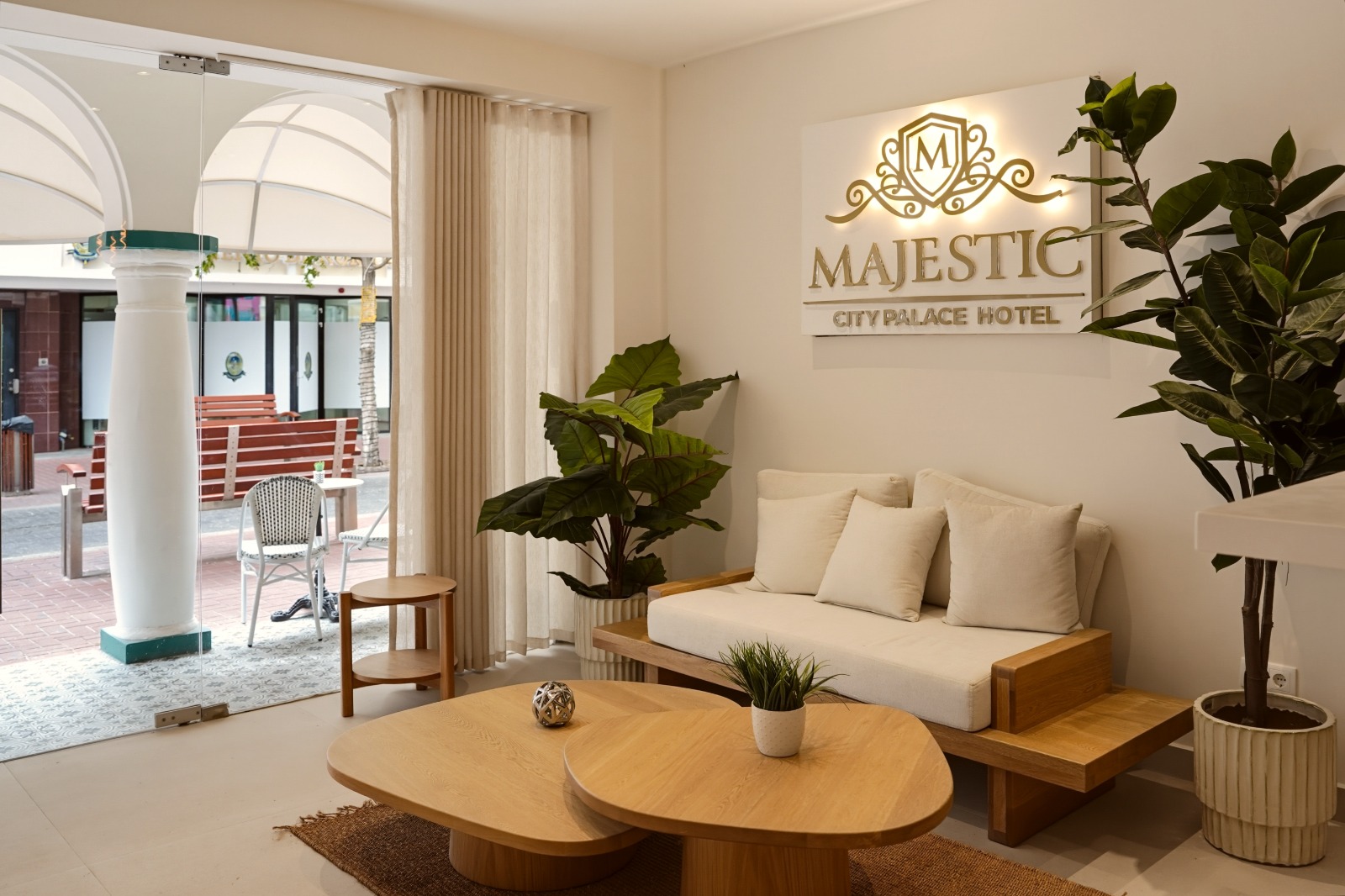
A restored 1892 monument, steps from everything in this guide.
Eighteen boutique rooms across five categories on Breedestraat, Punda. Signature balconies over the main street, and the Van Gogh café pouring espresso downstairs. Reserve your room on Airbnb in a few taps.