
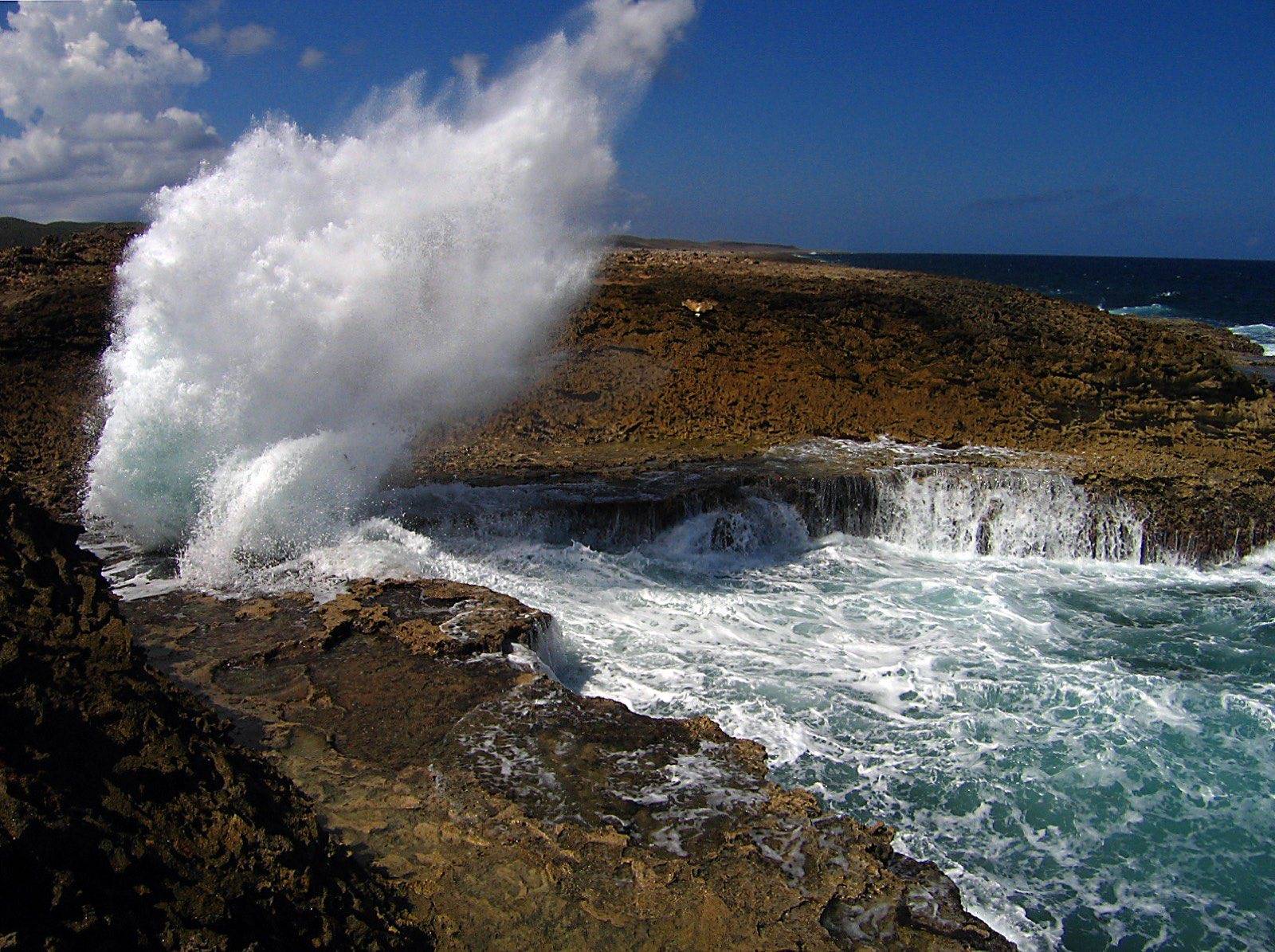
Curaçao keeps two coastlines and tells most visitors about only one. The southwest is the postcard: sheltered coves, glassy water, beach bars with the music low. The north coast is the other island. There, the open sea arrives unbraked after a very long run, meets raised limestone terraces, and loses its temper in public. Shete Boka National Park is where you stand at the rail and watch it happen.
The name translates as seven inlets, although the coastline, typically, over-delivers; walk far enough and you will count more. Each boka is a notch the sea has carved into the shelf, and each has its own act: one booms, one fires, several cradle turtle nests. Go in the morning, keep your feet on dry rock, and the park will put on the best show on the island.
I.What Shete Boka actually is
A long ribbon of protected shore on the island's wild north side, near the western end, just up the road from Christoffel National Park. Expect terraced limestone the color of old bone, wind that means it, blowholes, a booming cave, and small pebbled coves where sea turtles haul out at night to nest. There are no loungers, no swimming, and no shade worth the name. You visit Shete Boka the way you visit weather: dressed for it, respectful of it, and glad you came.
II.Boka Tabla: the boom under the shelf
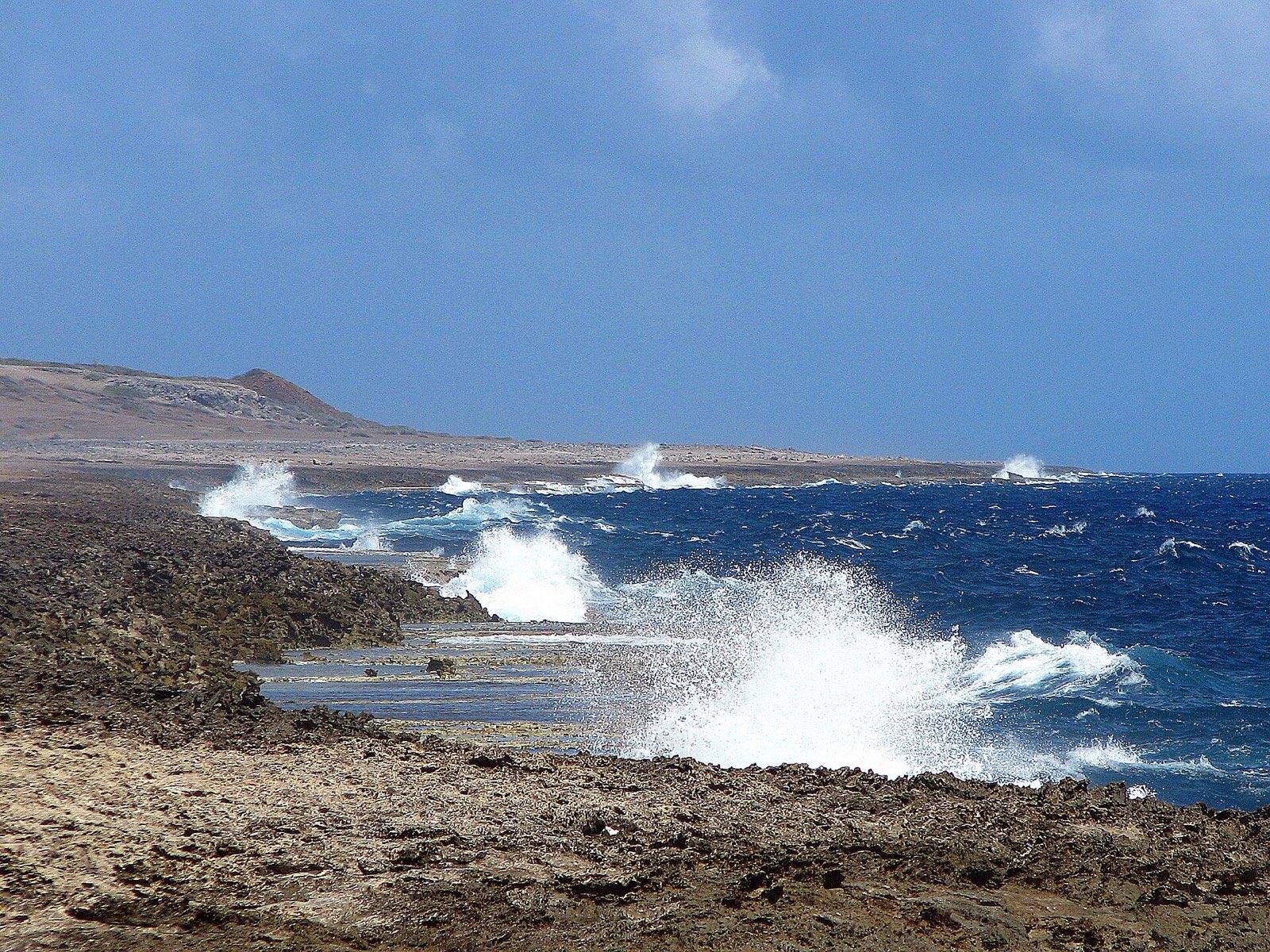
The park's signature stop, and the one that converts skeptics. A stairway leads down toward the mouth of a low limestone cave where the swell rolls in, compresses, and detonates beneath the shelf. You hear it through your ears and feel it through the soles of your feet, a percussion the whole rock participates in. Watch from above as well, where the inlet inhales and exhales like something alive. Keep to dry rock, give the lowest steps their respect, and remember that the sea decides when the spray flies, not you.
III.Boka Pistol: the island's cannon
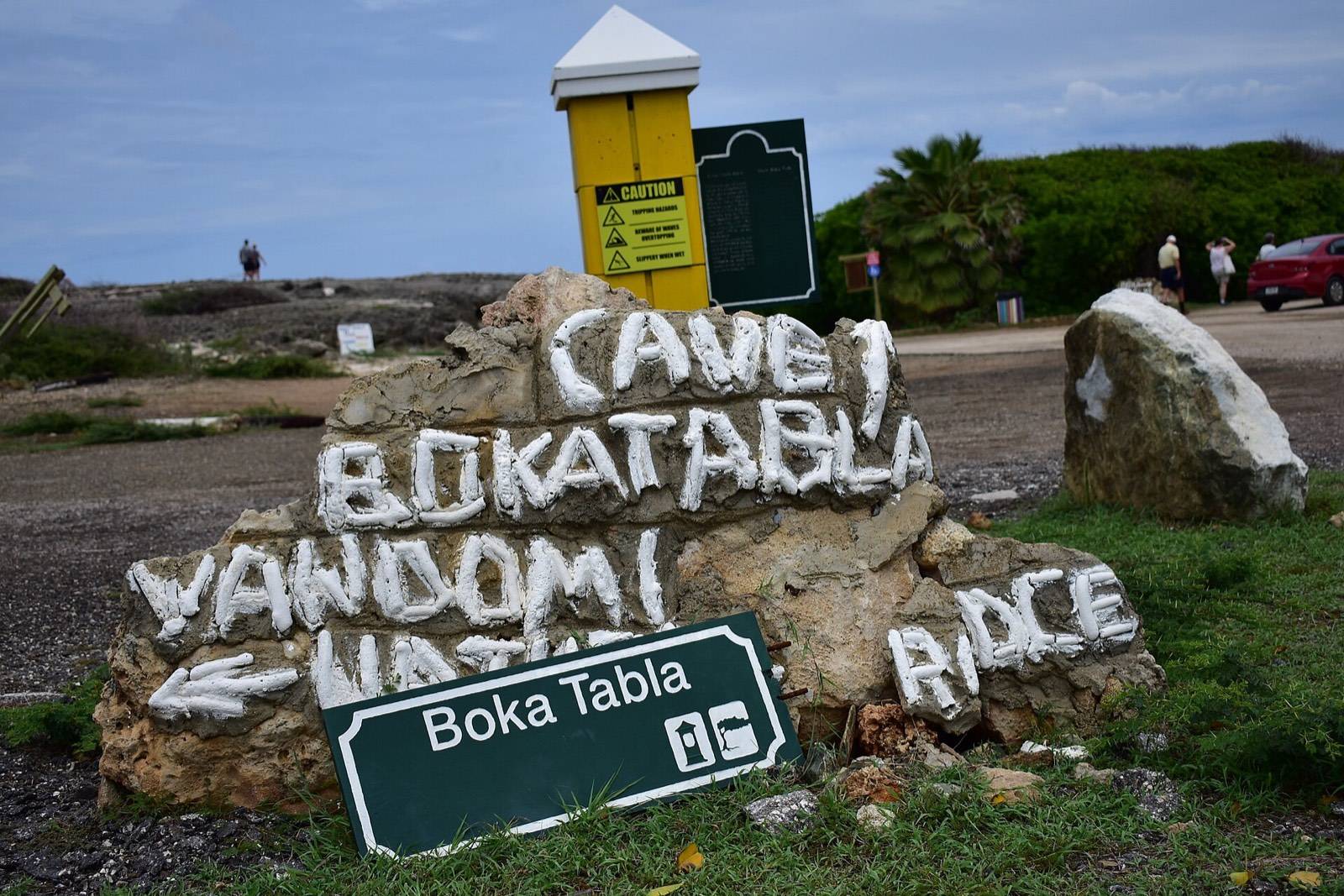
Farther along the coast, a narrow inlet funnels incoming waves into a chamber that fires them straight up, a white column with a crack you understand the instant you hear it. That is the pistol shot, and it is worth the rough walk. The blowhole works in sets, with lulls long enough to fool the impatient, so pick your spot, settle in, and give it ten unhurried minutes. The show scales with the swell: after a few days of brisk trade wind it throws its highest columns, and on glassy days it merely smokes.
The southwest coast is where Curaçao swims. The north coast is where the island shows its teeth, and Shete Boka is the front row.
IV.The coves where turtles nest
Between the famous stops, several bokas hide small pockets of pebble and sand, and on nesting-season nights sea turtles climb them to bury their eggs. Daytime visitors see the cradle, not the ceremony, and that is exactly as it should be. Stay out of any cove that is roped or marked, never dig or disturb the sand, and keep drones grounded. For the turtles you can reliably watch in the water, circling a fishermen's pier on the calm coast, see our Curaçao wildlife guide and the shore entries in our snorkeling guide.
V.How to visit well
Morning is the park at its best: low light raking across the water, cooler air, and a wind that has not yet built to its afternoon lean. The rules are few and unbending. No swimming, anywhere, ever on this coast; the currents and undertow are not negotiable, and even wading at a calm-looking cove is a bad trade. Stay back from wet rock, because on this shore wet is not a color, it is a message that a wave reached there recently and another will. And dress for the terrain: closed shoes against ironshore limestone sharp enough to ruin a sandal, a hat that ties, water, and sun cover, because shade does not exist here. A rough park track connects the main stops and sections of coast can be walked; ask at the gate what is open and what suits your car.
| Stop | Why you stop | Footing |
|---|---|---|
| Boka Tabla | surf booming beneath the cave shelf | stairway and viewing areas |
| Boka Pistol | the blowhole firing in sets | uneven, sharp limestone |
| The coastal stretches | terraces, spray, seabirds riding the wind | open rock, no shade |
| The nesting coves | turtle cradles, admired from a distance | stay behind any markers |
VI.Pairing it with Christoffel and the west
Shete Boka and Christoffel sit minutes apart on the same road and were made to share a morning. Hikers climb the summit at gates-open and arrive here by mid-morning with the light still good; non-hikers reverse it, taking the bokas first and the park's driving routes after. Either way, finish the way the west intends: a fish lunch near Westpunt and a slow swim at one of the sheltered west-end coves, washing off the salt spray with the calmer kind. The full far-west route, lookouts and lunch included, lives in our Westpunt guide.
VII.Getting there
The park entrance is signed off the main western road, about 45 minutes by car from Willemstad, a few minutes beyond the Christoffel gate. A regular rental makes the trip comfortably, and admission is charged at the gate; confirm the details locally. Guests at our 1892 monument in Punda usually fold Shete Boka into a single west-end day, and the concierge can arrange the route and the timing around the cruise calendar.
One last honest word: Shete Boka does not photograph the way it feels. The boom under Boka Tabla arrives through your feet, the pistol crack arrives through your chest, and no lens carries either home. Go in the morning, stand on dry rock, and let the island raise its voice.
Questions travelers ask
Straight answers from the front desk.
Can you swim at Shete Boka?
What is Boka Tabla?
When is the best time to visit Shete Boka?
How long do you need at Shete Boka?
Do sea turtles really nest at Shete Boka?
Keep exploring
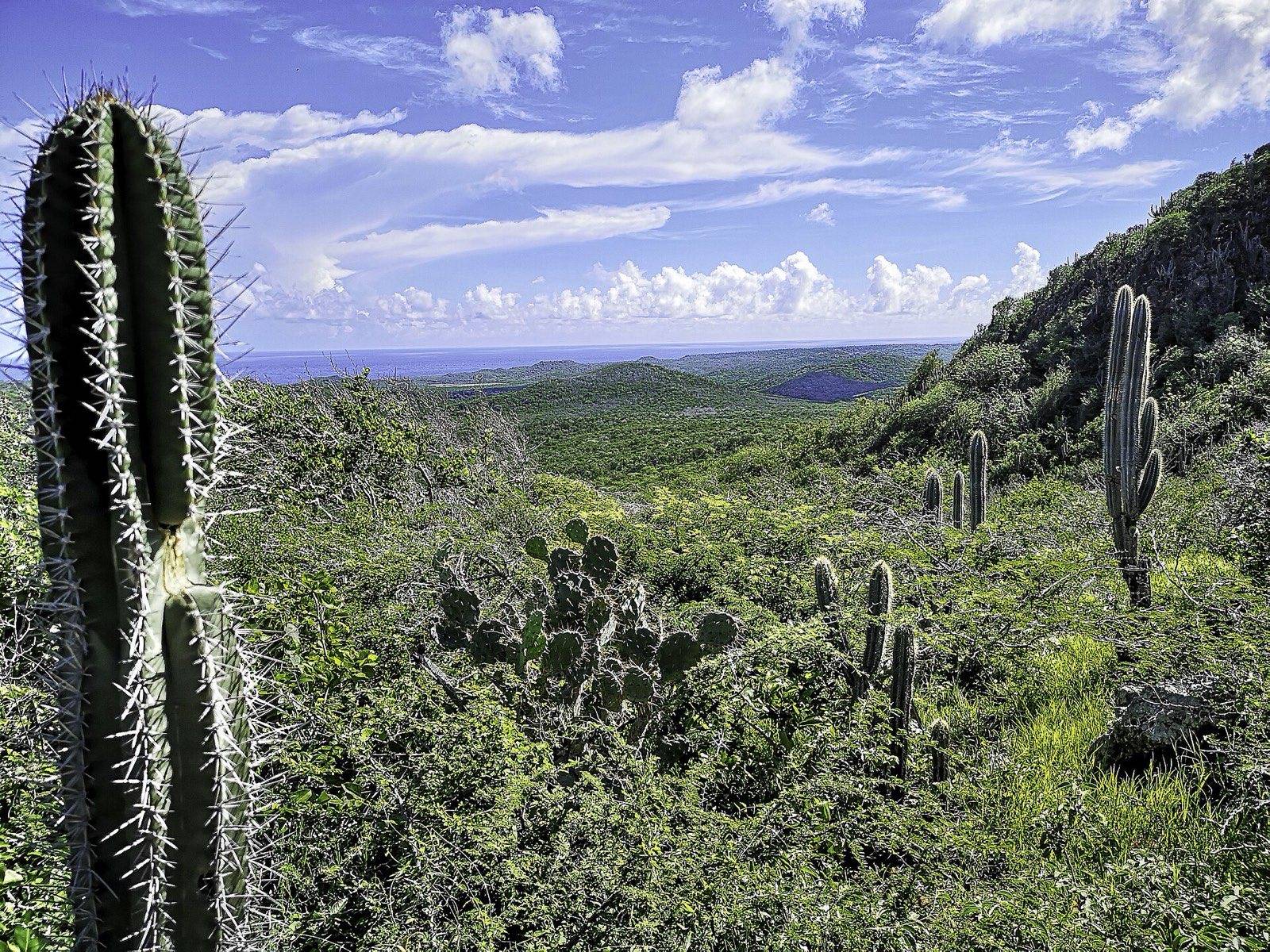
Christoffel National Park: climbing Curaçao at first light
Plan the Christoffel National Park summit hike: why you must arrive when the gates open, the driving routes…
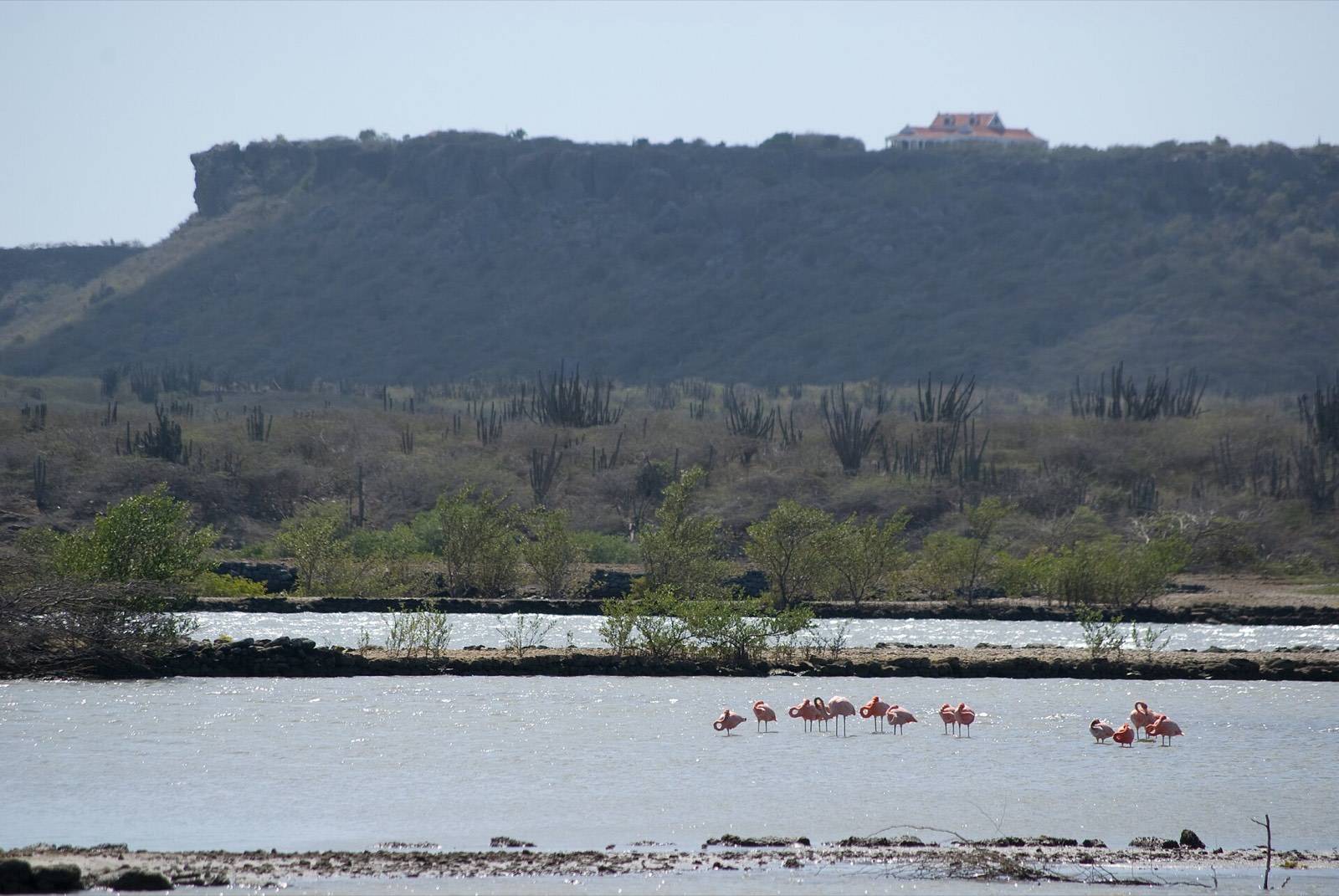
Curaçao wildlife guide: where the flamingos, turtles, and bats actually are
Where to see flamingos in Curaçao, plus sea turtles at Playa Piskado, iguanas, hummingbirds at dawn, and the…
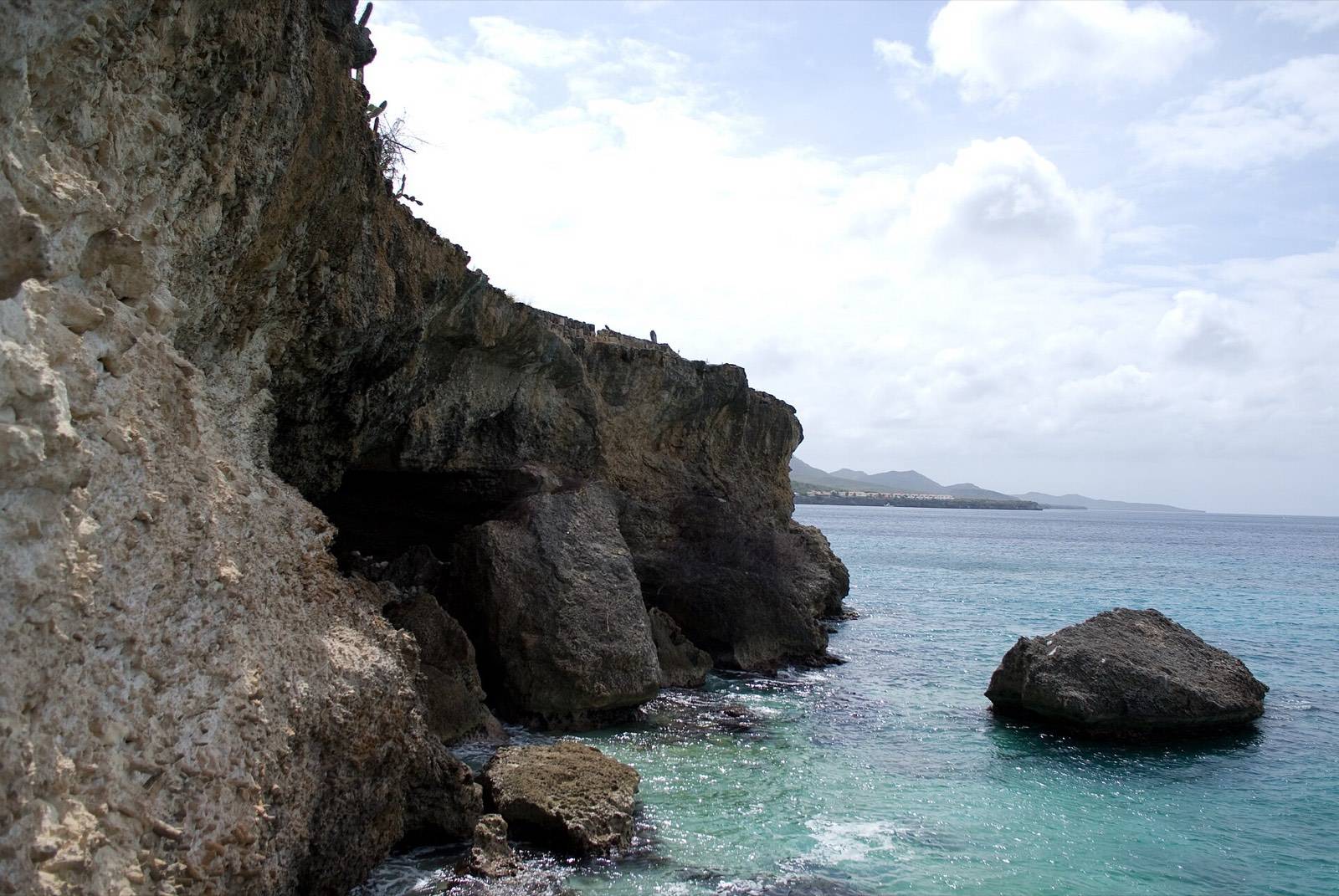
Westpunt, Curaçao: a full day on the wild west end
A local guide to Westpunt, Curaçao: the Grote Knip lookout, turtles at Playa Piskado, the Watamula blowhole…
A restored 1892 monument, steps from everything in this guide.
Eighteen boutique rooms across five categories on Breedestraat, Punda. Signature balconies over the main street, and the Van Gogh café pouring espresso downstairs. Reserve your room on Airbnb in a few taps.